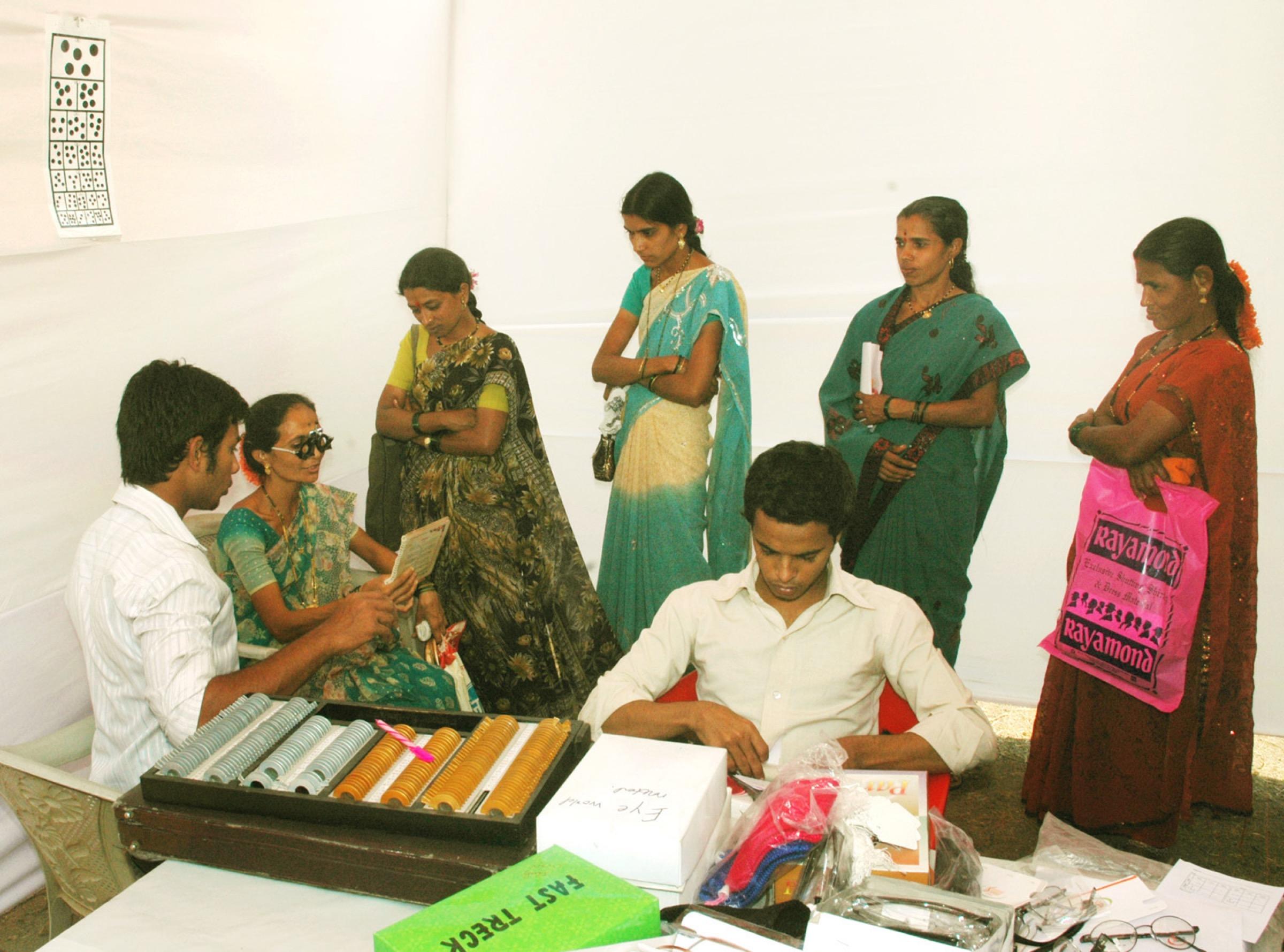
Eye screening, close to home
Primary Vision Centres and community camps that find eye disease early, correct vision on the spot, and connect people to specialists when they need one.
Most blindness in India is avoidable, if it is found in time.
In many rural and remote communities, the nearest eye specialist is hours away. People wait until they can no longer see, and by then some damage can’t be undone.
A HealthHusk Primary Vision Centre is the first point of contact for eye care in the community: a full advanced eye examination, vision testing and spectacles, with specialist opinion through tele-ophthalmology and referral to hospital when treatment or surgery is needed.
93%
of blindness among Indians over 50 comes from avoidable causes.
2 in 3
cases of blindness in that age group are caused by cataract.
Source: National Blindness & Visual Impairment Survey 2015–19, AIIMS / Ministry of Health and Family Welfare
Conditions we screen for
Four conditions cause most avoidable vision loss. Each is easier to treat when it is found early.
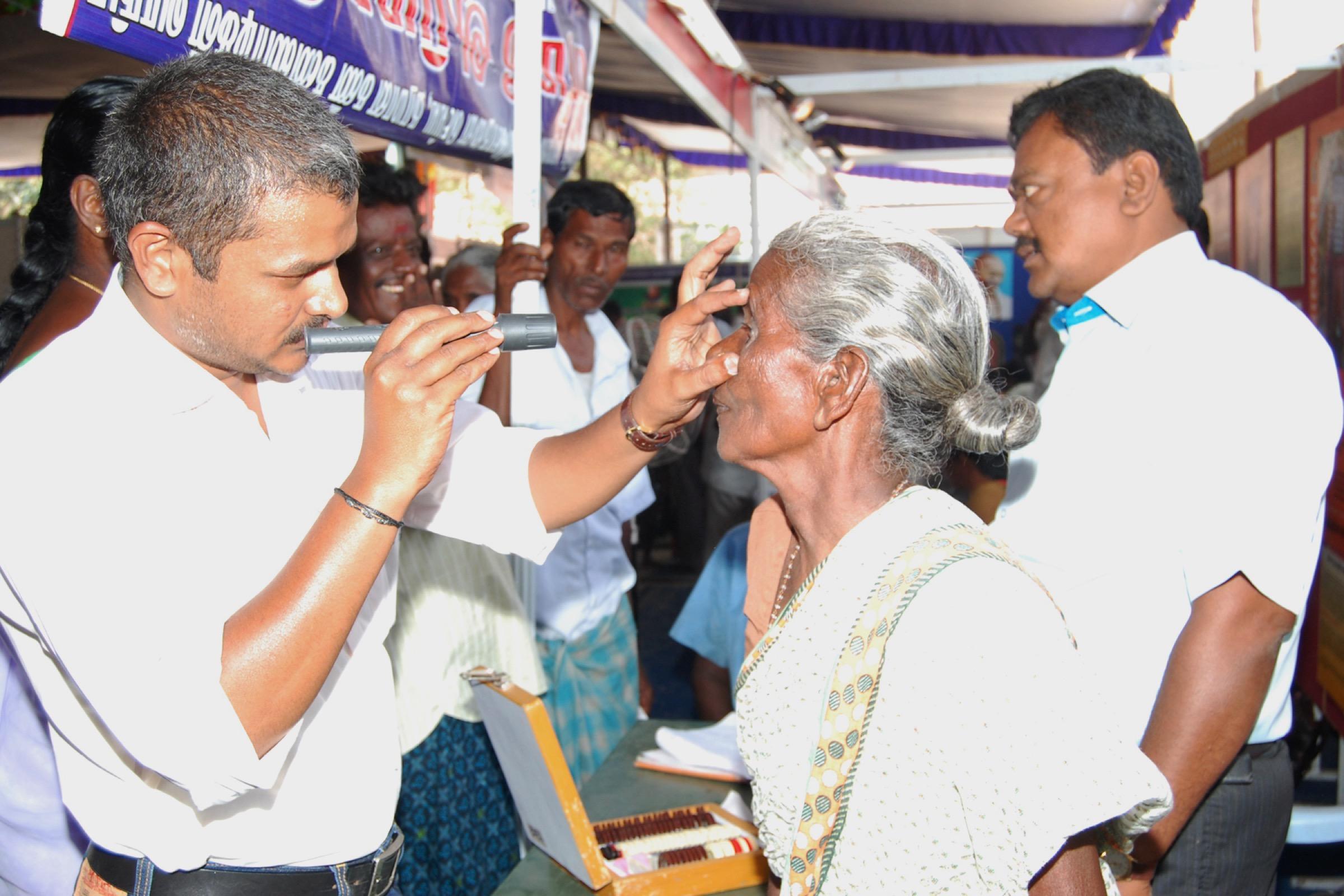
Cataract
The lens inside the eye turns cloudy, and the world fades behind it. It is the most common cause of blindness in older Indians, and one of the most treatable.
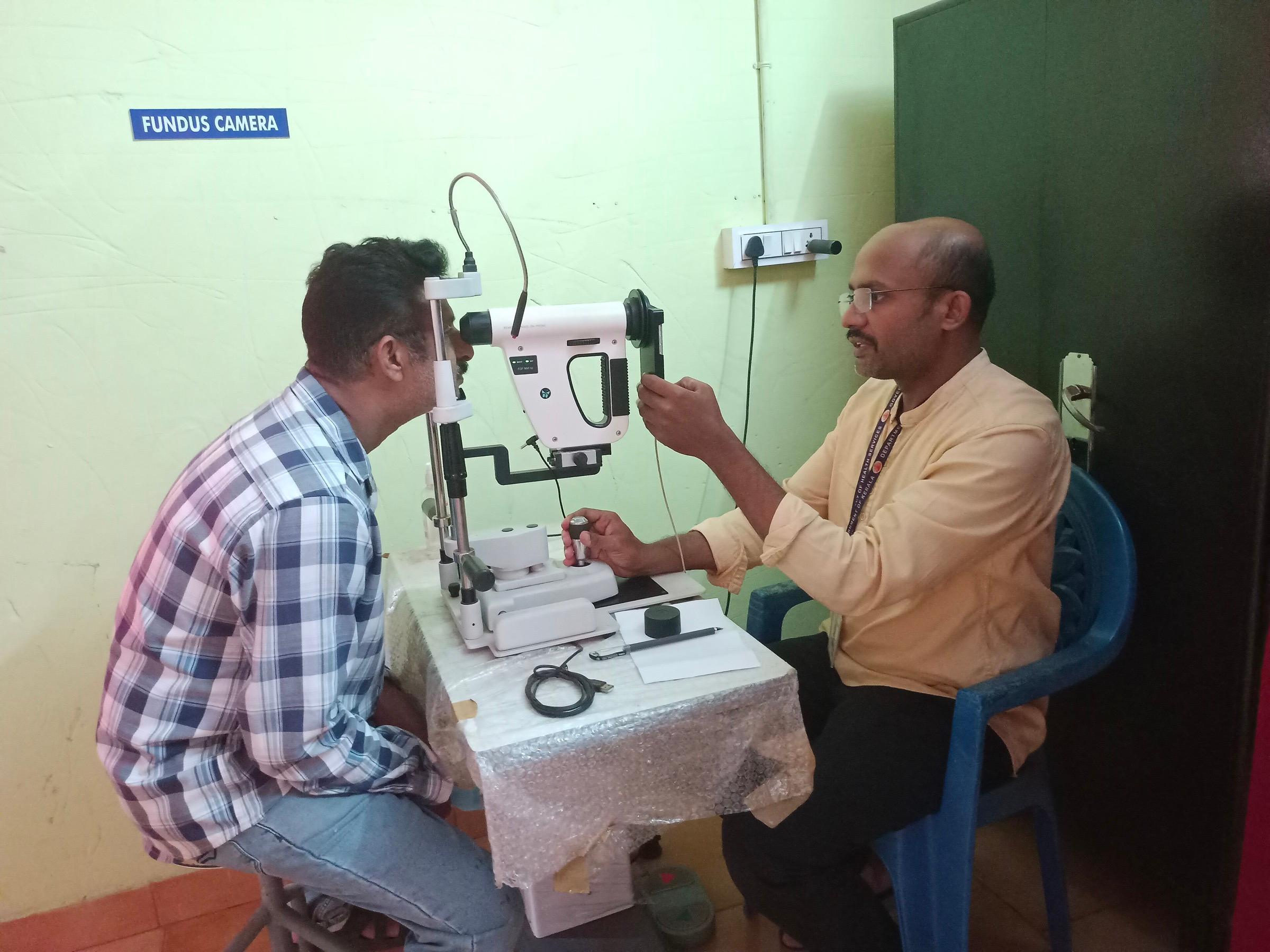
Diabetic retinopathy
Diabetes quietly damages the blood vessels at the back of the eye. Often there are no symptoms until sight is already lost, so a yearly retinal check matters.
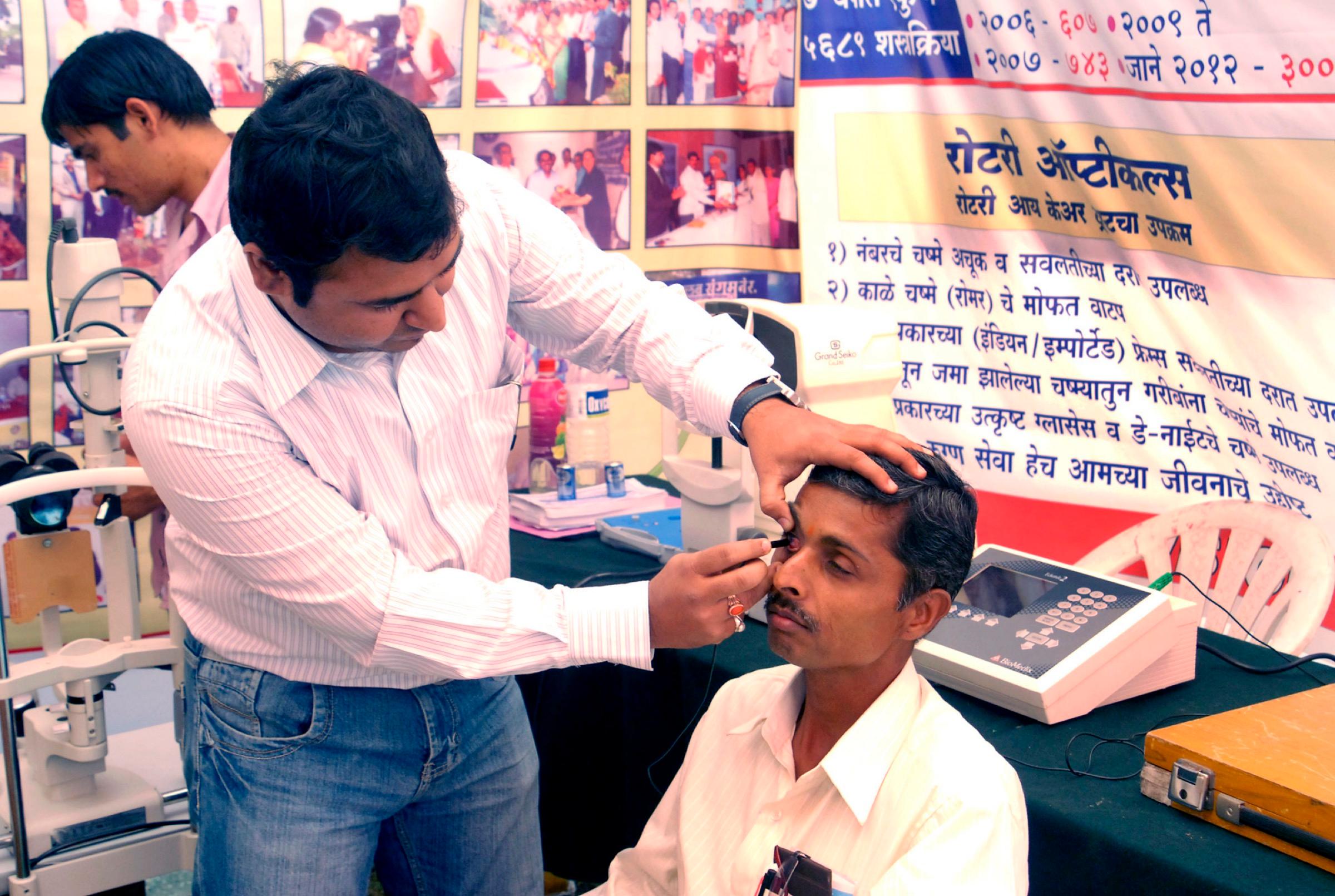
Glaucoma
Glaucoma damages the optic nerve and slowly closes in side vision. Most people don't notice until it is advanced, and lost vision cannot be restored.
Refractive error
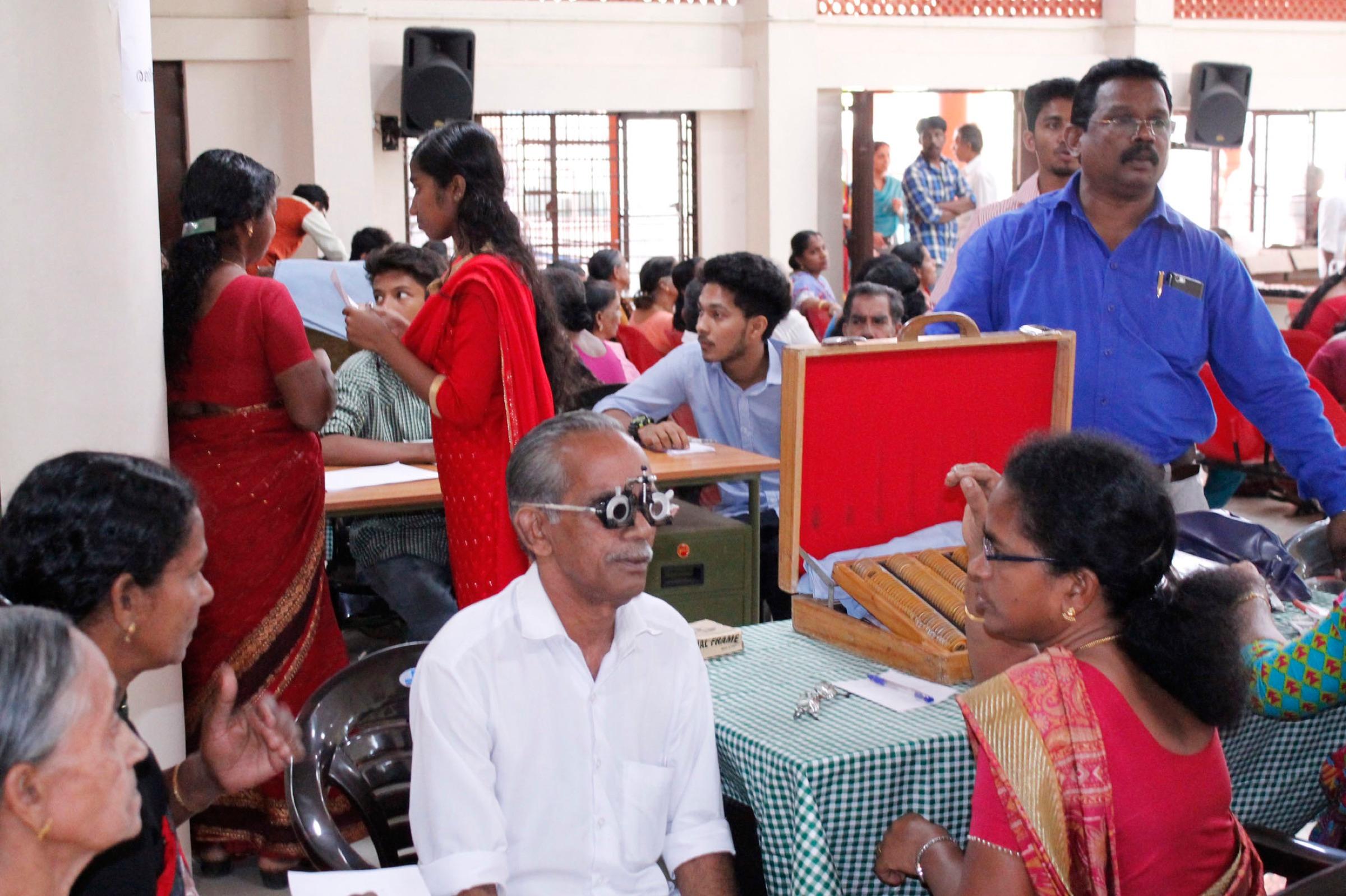
Short sight, long sight and age-related difficulty with near vision blur the world. Often a pair of spectacles is all it takes to see clearly again.
At a Primary Vision Centre
Technology-enabled centres that provide essential eye care close to home.
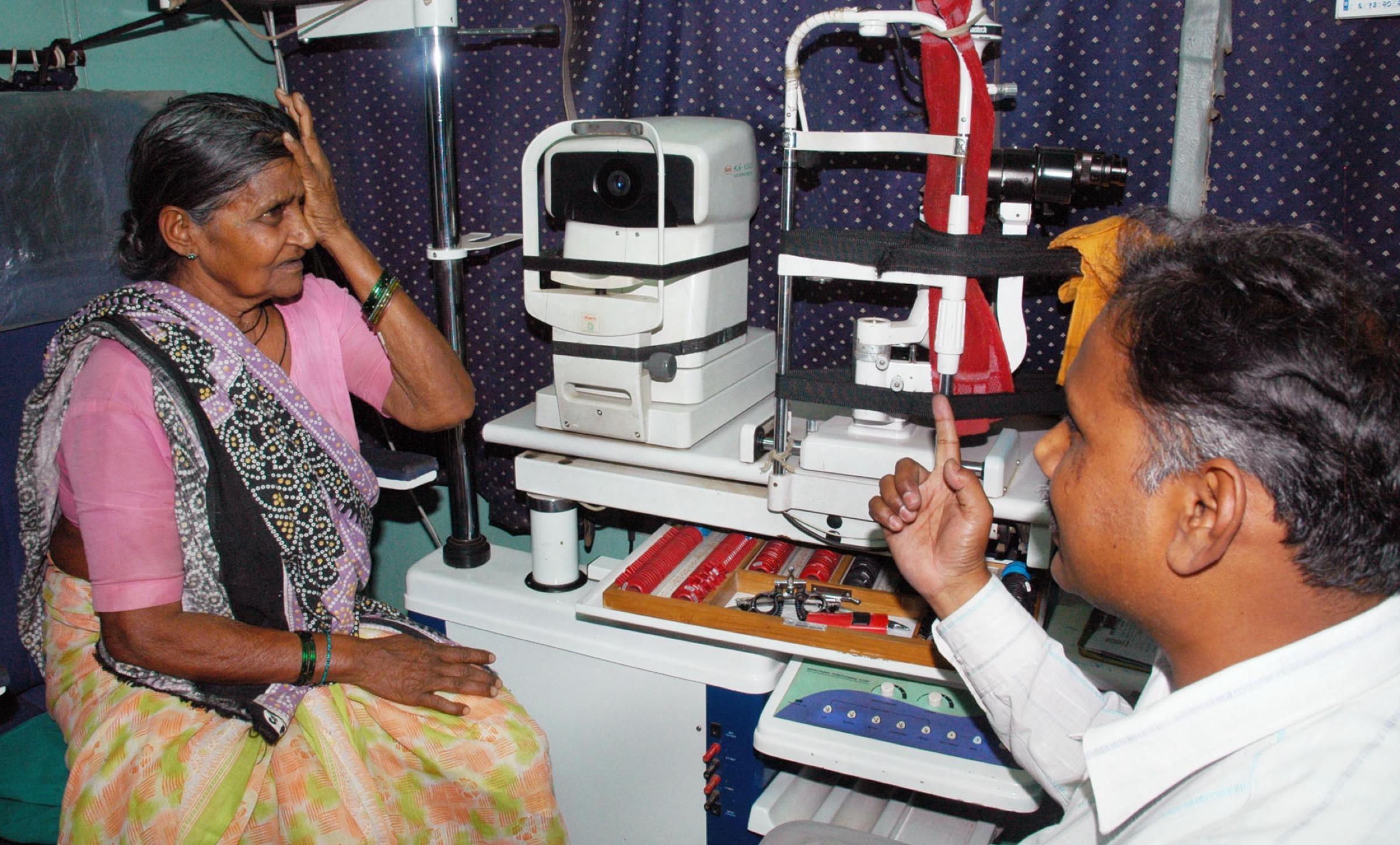
- Comprehensive advanced eye examinations
- Vision assessment and refractive error correction
- Spectacles and essential eye care products
- Tele-ophthalmology consultations with eye specialists
- Screening and early identification of common eye diseases
- Referral and follow-up with secondary and tertiary hospitals
A specialist, without the journey
Where specialists are few, technology closes the distance. Retinal photographs and test results are shared securely with qualified eye specialists, who review them and advise on the next step.
People who need an in-person assessment or surgery are referred to a partner hospital, and we help them get the appointment and come back for follow-up.
What happens at a screening
You leave knowing what we found and what comes next.
Registration
We note your details, your health history and any medicines, especially for diabetes or blood pressure.
Vision test
You read letters or symbols on a chart, at a distance and up close, with and without your spectacles.
Advanced eye examination
A trained examiner checks the front of the eye, the lens, and the signs that point to glaucoma.
Retinal photograph
For people with diabetes or other risks, a camera photographs the back of the eye in a few seconds.
Specialist review
When needed, an eye specialist reviews the findings remotely through tele-ophthalmology.
Your result
You hear what we found the same day: spectacles, a follow-up date, or a referral we help you arrange.
Eye screening: common questions
Can’t find your answer? Ask for a call back and we’ll talk it through.
Who should have an eye screening?
Everyone benefits from a regular eye check, but it matters most for adults over 40, anyone with diabetes or high blood pressure, people with a family history of glaucoma, and children who struggle at school.
Do I have to travel to a city hospital?
Usually not. Screening happens at camps in the community and at our Primary Vision Centres close to home. Only people who need surgery or specialised treatment are referred to a partner hospital, and we help coordinate that appointment and the follow-up.
What is tele-ophthalmology?
Photographs of the back of your eye and your test results are shared securely with a qualified eye specialist, who reviews them remotely. You get a specialist's opinion without making the journey yourself.
What should I bring?
Bring any spectacles you use, a list of the medicines you take, and any earlier eye or diabetes reports. If you have diabetes, tell us when you book.
Eye health articles
Reach the unreached. Detect early. Intervene on time.
Book an eye screening
Leave your number and we’ll call you back.
- Phone+91 88828 97122
- WhatsAppMessage us on WhatsApp