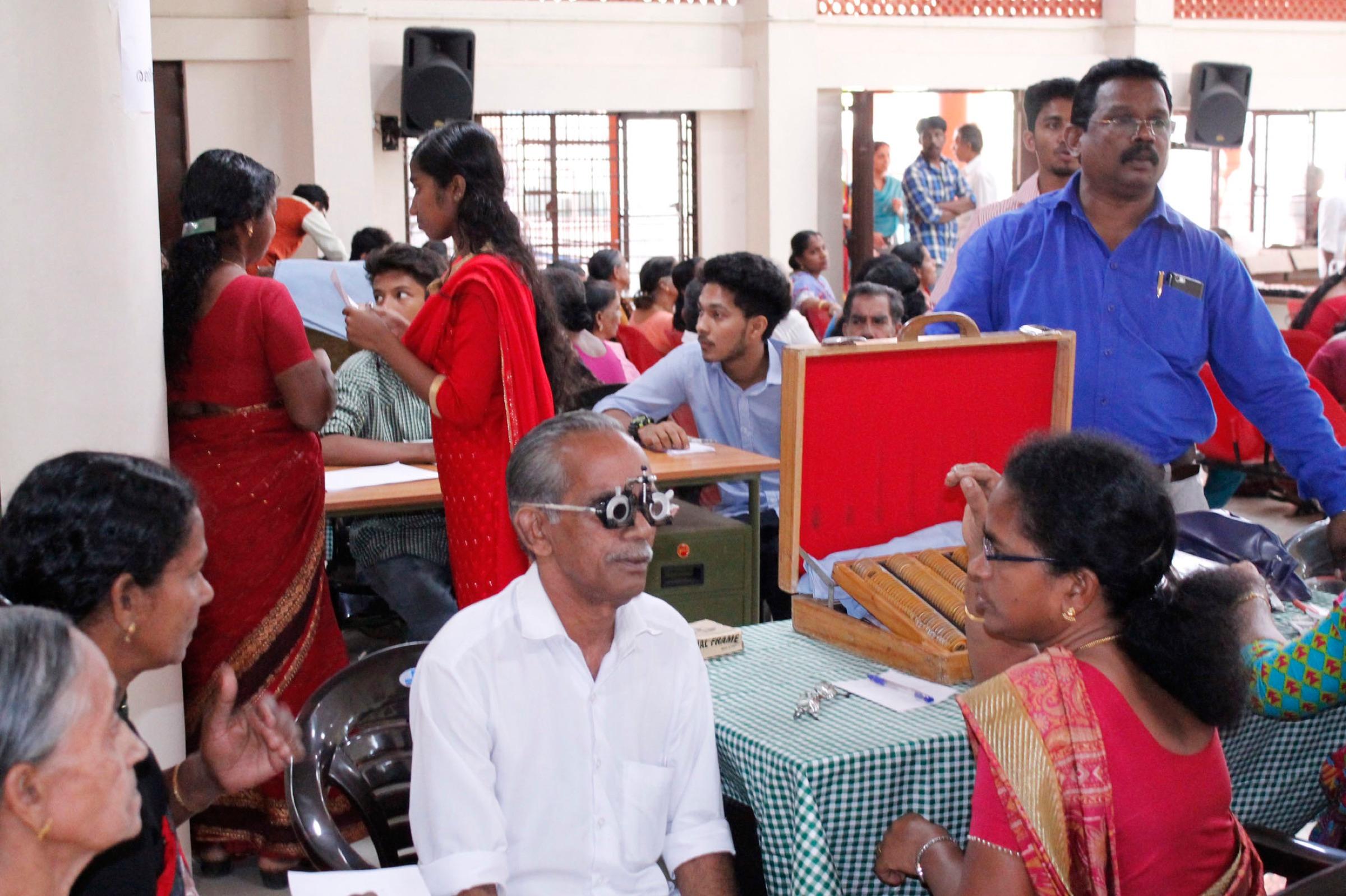
Refractive error: vision tests and spectacles
Short sight, long sight and age-related difficulty with near vision blur the world. Often a pair of spectacles is all it takes to see clearly again.
The simplest fix in eye care, and still one of the most needed.
What is refractive error?
A refractive error means the eye doesn't focus light sharply on the retina. Short sight (myopia) blurs things in the distance. Long sight (hypermetropia) makes close work hard. Astigmatism blurs vision at all distances.
From the early 40s almost everyone develops presbyopia: the lens loses its flexibility and reading, sewing or using a phone up close gets harder. Uncorrected, these problems hold children back at school and adults back at work.
Signs to look out for
- Blurred vision in the distance or up close
- Squinting, headaches or tired eyes
- Children holding books very close, or struggling to read the board
- Difficulty reading, threading a needle or using a phone after 40
Who is most at risk
- A family history of short sight
- Age over 40, for near-vision problems
- Long hours of close work or screen time in childhood
- Little time outdoors in childhood
How HealthHusk helps
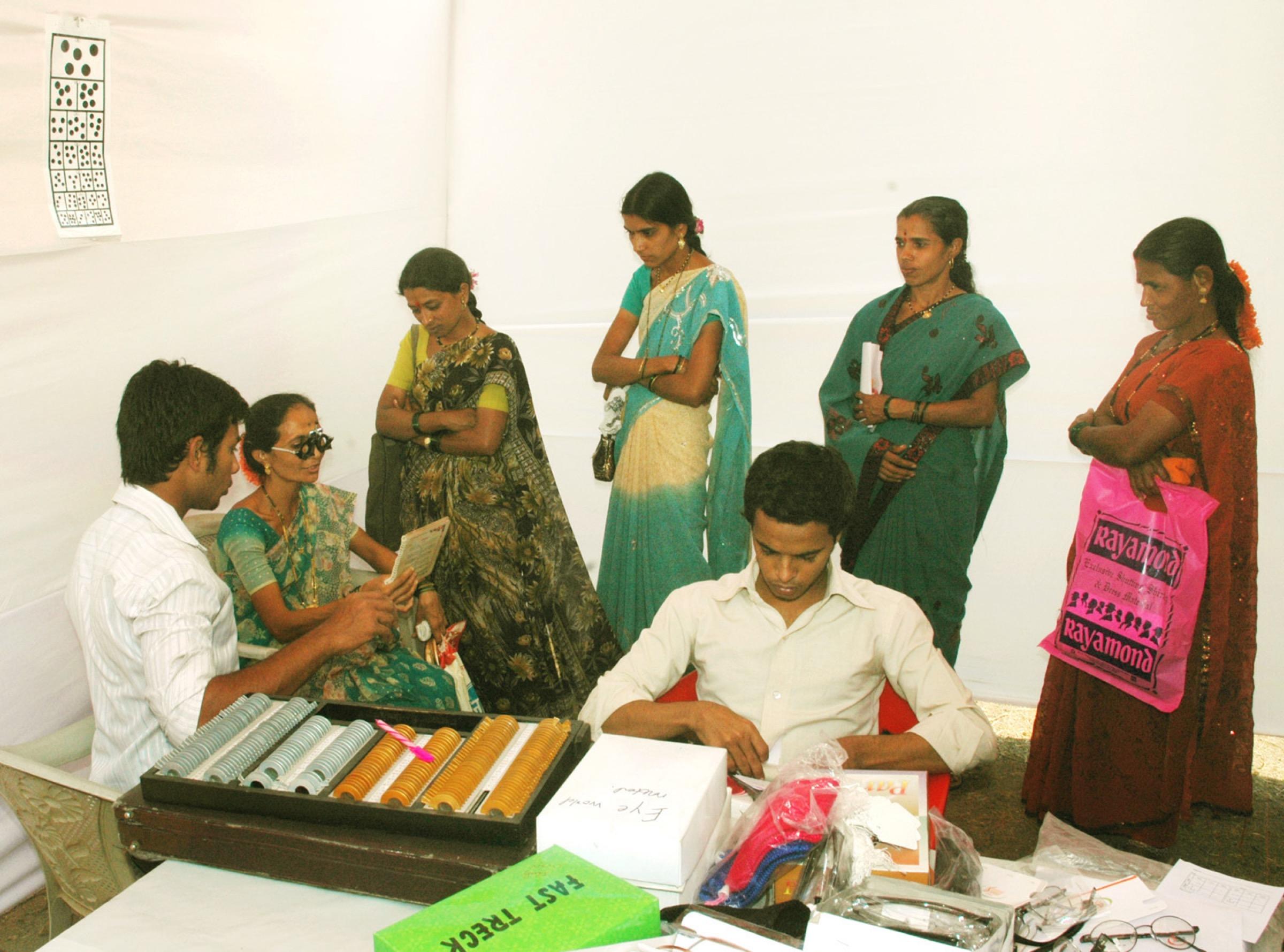
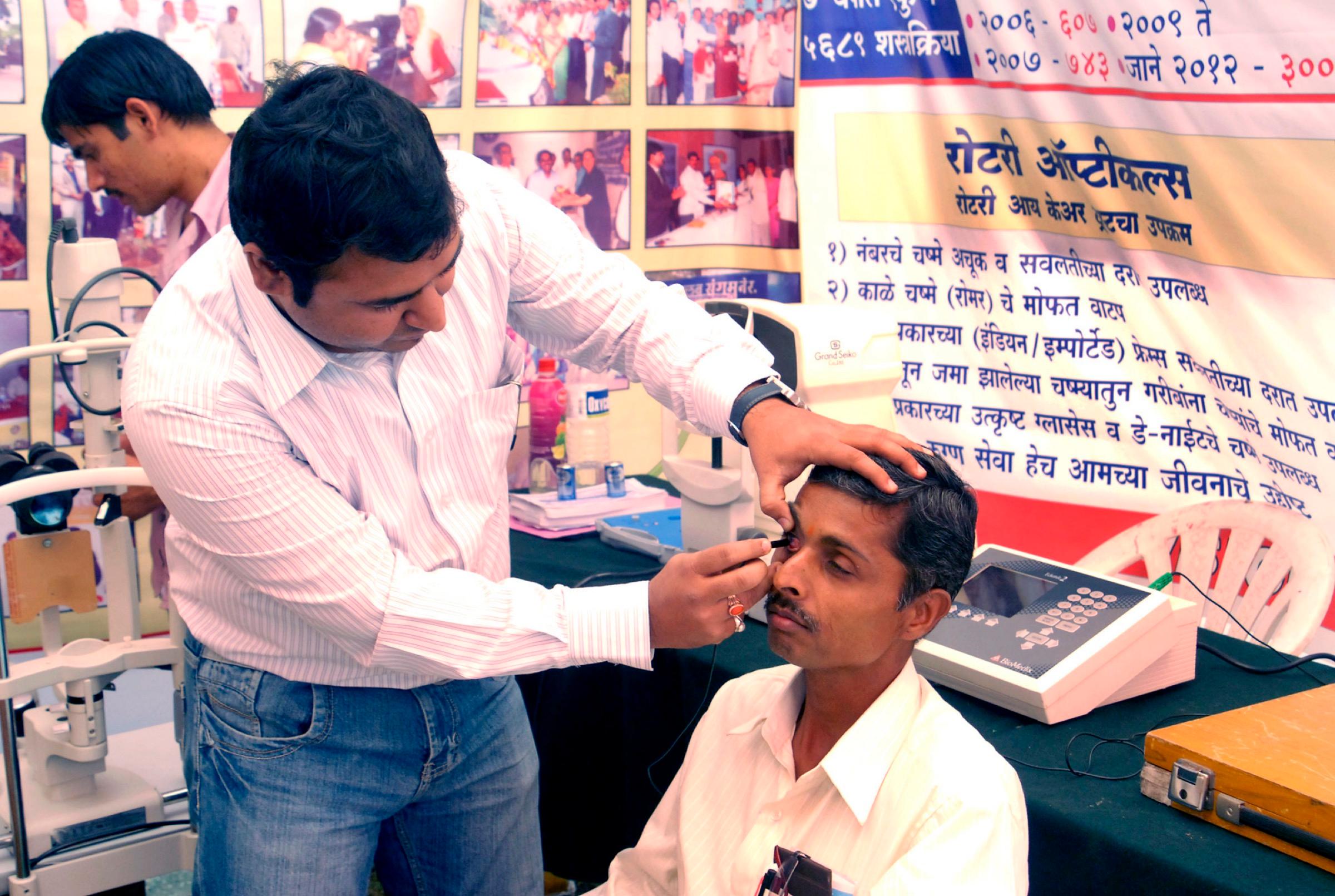
We find refractive error early, close to home, and make sure the people who need specialist treatment reach it.
- A vision test and refraction to find the right power
- Spectacles dispensed at the Primary Vision Centre
- Further evaluation if vision doesn't improve with spectacles
- Regular checks for children and adults over 40
Other conditions we screen for
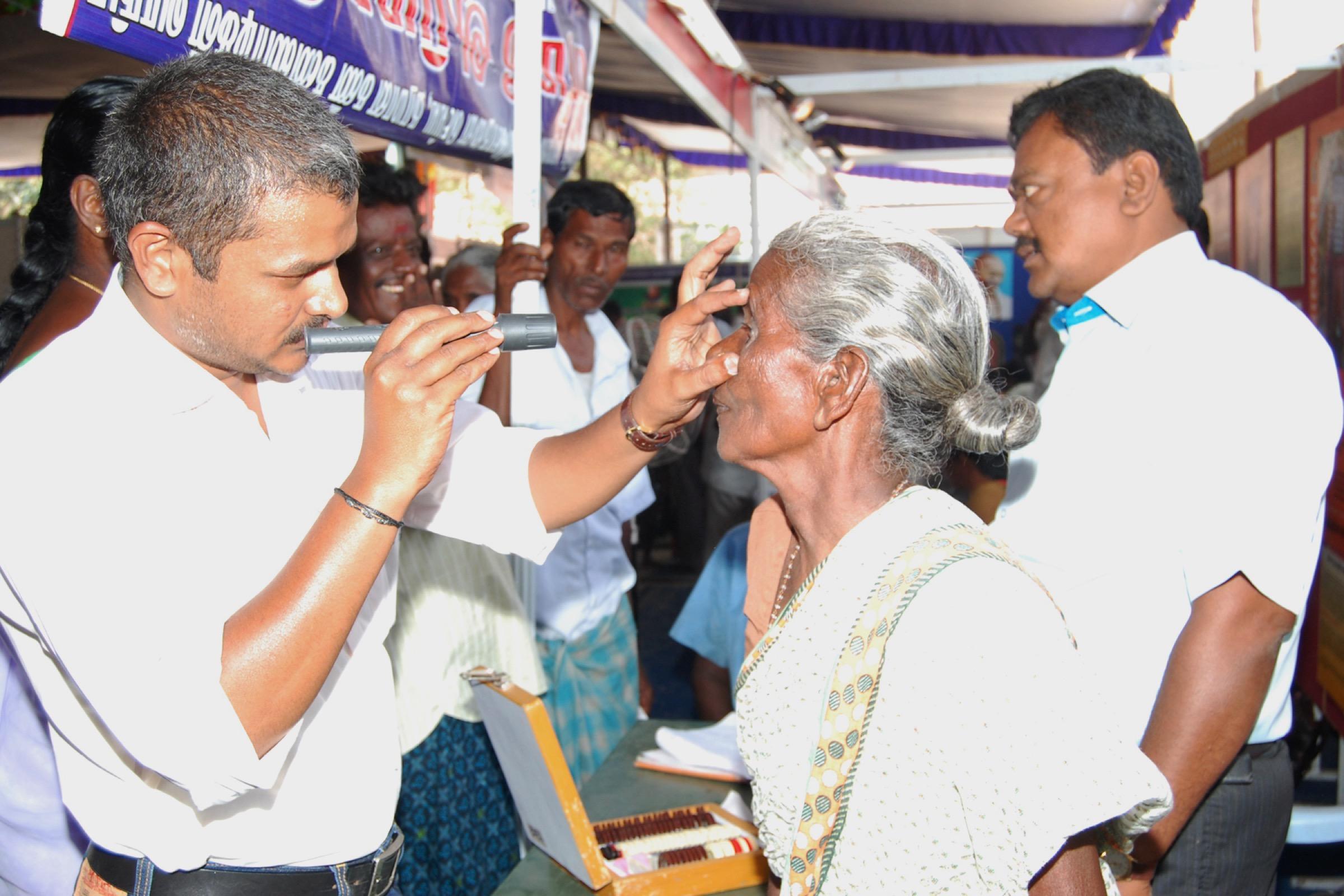
Cataract
The lens inside the eye turns cloudy, and the world fades behind it. It is the most common cause of blindness in older Indians, and one of the most treatable.
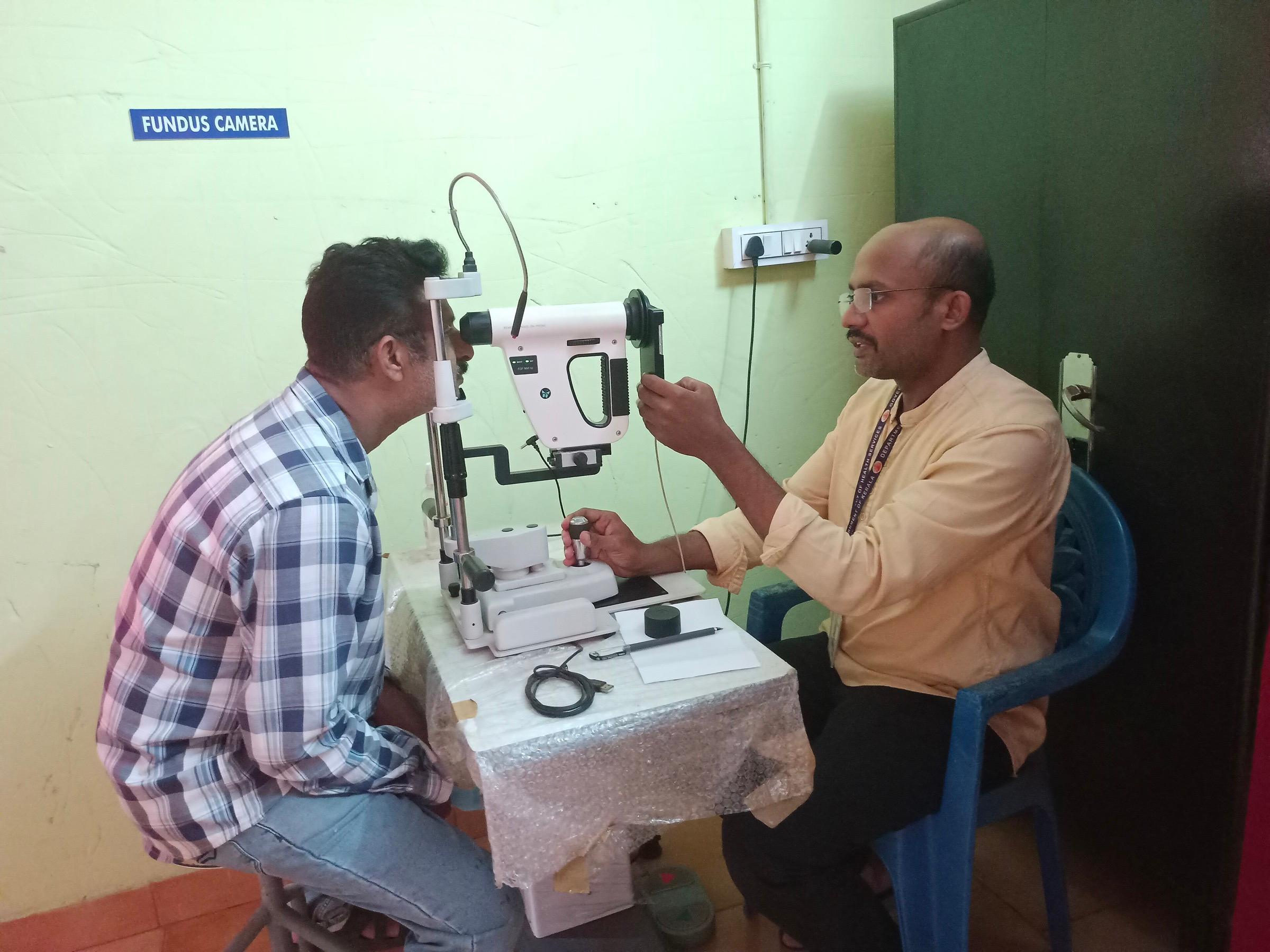
Diabetic retinopathy
Diabetes quietly damages the blood vessels at the back of the eye. Often there are no symptoms until sight is already lost, so a yearly retinal check matters.
Glaucoma
Glaucoma damages the optic nerve and slowly closes in side vision. Most people don't notice until it is advanced, and lost vision cannot be restored.
Refractive error: common questions
Can’t find your answer? Ask for a call back and we’ll talk it through.
Can I just buy reading glasses from a shop?
Ready-made readers can help with near vision, but they don't correct short sight, astigmatism or a difference between the two eyes. An eye test also checks for cataract, glaucoma and other conditions that spectacles can't fix.
How often should children have their eyes tested?
Children should have a vision check before starting school and regularly after that, especially if they struggle to read, sit close to the screen or complain of headaches.
Will wearing spectacles make my eyes weaker?
No. Spectacles don't weaken the eyes. They let you see clearly while you wear them. Your power may change over time with age, which is why regular checks are useful.
More on refractive error
Reach the unreached. Detect early. Intervene on time.
Book an eye screening
Tell us where you are and we'll call you back with the nearest centre or camp.
- Phone+91 88828 97122
- WhatsAppMessage us on WhatsApp